
Look, I’ve been watching the self-publishing space for years, and the evidence tells a pretty specific story. The economics of self-publishing in 2026 deserve more careful attention than most coverage gives them. Once you dig past the surface hype, the reality is actually more interesting.
Here’s what actually matters: romance and thriller self-published authors are routinely pulling in six figures annually. That’s not a fluke or cherry-picked success story. That’s a pattern worth understanding if you care about where publishing is headed.

Why the Numbers Actually Matter
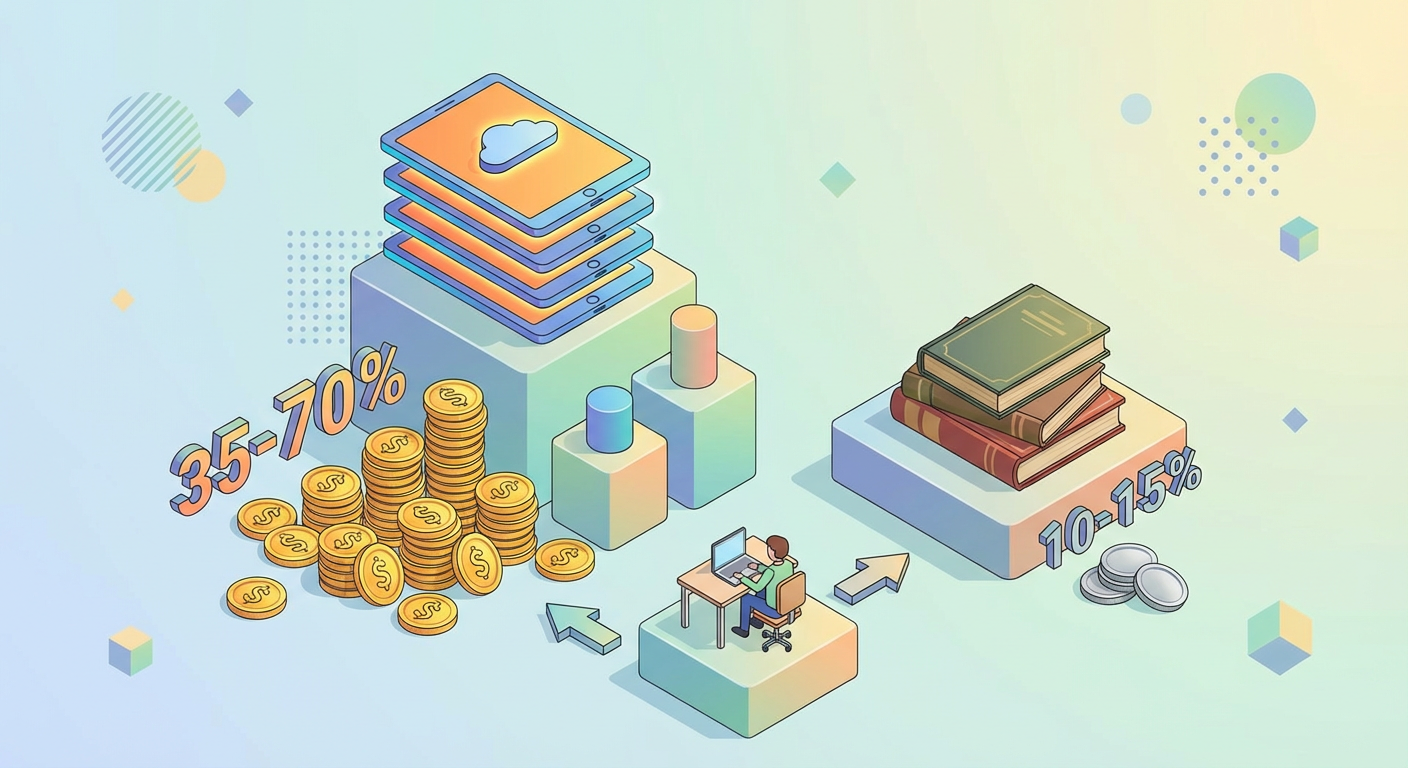
Kindle Direct Publishing authors earn 35-70 percent royalties versus 10-15 percent at traditional publishers. This isn’t just another data point, it’s the foundation that makes everything else possible. These conditions have been building for years, and we’re finally seeing them reach a tipping point.
Romance and thriller self-published authors are routinely earning six figures annually.
Audiobook rights are now as valuable as print for top indie authors. The Alliance of Independent Authors has been tracking this consistently, and the trend is undeniable.
What makes this moment interesting isn’t the novelty, it’s the confirmation. These patterns have been visible for a while, but now they’ve reached a point where you have to actively ignore them rather than just missing them through inattention. That’s the real shift.
Draft2Digital distributing to 40+ retailer platforms from one upload fits into the same picture. These aren’t isolated developments. They’re reinforcing each other in ways that create new possibilities for independent authors.
The Real Story Behind the Headlines
Draft2Digital distributing to 40+ retailer platforms from one upload sounds straightforward, but it misses the deeper mechanics. The real driver is BookTok pushing 20-30 percent of fiction discovery for under-35 readers. Understanding that changes everything about how you approach book marketing.
Wide distribution versus Amazon-exclusive KDP Select is still the big strategy debate for indie authors.
Look, I get the skepticism. We’ve seen similar moments before that didn’t pan out the way people expected. But here’s what’s different: wide distribution versus Amazon-exclusive KDP Select is still the defining strategy debate because the infrastructure has actually changed. Infrastructure changes stick around in ways that hype cycles don’t. The Reedsy self-publishing guide tracks this with the kind of detail that actually helps you make decisions.
There’s something else worth mentioning that gets glossed over: who actually benefits from these changes, and who pays the costs? The overall picture might look good while the benefits get distributed pretty unevenly. That matters a lot if you’re trying to figure out your own position in all this.
What This Means for Literary Translation Work
The effects of these self-publishing changes reach beyond the obvious boundaries. Kindle Direct Publishing authors earning 35-70 percent royalties versus 10-15 percent at traditional publishers, combined with everything else happening, creates ripple effects that hit adjacent fields and communities in ways that aren’t immediately obvious. Often the second-order effects matter more than the first-order ones.
Serious literary engagement without academic stuffiness.
The question isn’t whether to engage with these changes, but how. That depends on your specific situation and what decisions you’re actually facing. But the first step is always the same: understanding what’s really happening instead of what the most convenient story claims is happening.
A few things are worth calling out specifically. First: romance and thriller self-published authors routinely earning six figures annually isn’t a temporary spike. It’s a new baseline. Second: BookTok driving 20-30 percent of fiction discovery for under-35 readers suggests we’re still in the middle of this shift, not at the end. Third, and most important: anyone treating this moment as a new steady state instead of an ongoing transition is setting themselves up for problems later.
The Skeptics Have a Point
Honestly, the critics of this optimistic reading have some real points worth considering. The current state of self-publishing has structural vulnerabilities that deserve attention, not dismissal.
The biggest concern is sustainability. Audiobook rights being as valuable as print for top indie authors might represent a ceiling rather than a foundation. If we’ve already captured most of the early adopters willing to try self-publishing, the remaining growth curve could be much flatter than recent trends suggest.
Wide distribution versus Amazon-exclusive KDP Select is still the defining indie strategy debate.
What’s Coming Next
The direction is clearer than the timeline. Anyone claiming to know exactly when specific milestones will hit should be treated with suspicion. But the movement toward Kindle Direct Publishing authors earning higher royalties and continued development of these supporting conditions has solid evidence behind it.
Wide distribution versus Amazon-exclusive KDP Select is the indicator I’m watching. Historical patterns suggest it moves first, with other metrics following behind. That doesn’t guarantee specific outcomes, but it makes the trends readable. And readable trends are what you need to make good decisions.
Three questions worth tracking as this develops. First: are the structural conditions behind the current state durable, or cyclical? Second: who benefits from the next phase, and is that different from who benefited so far? Third: what would clean evidence against the optimistic case look like, and are we seeing any signals of that? You don’t need answers today, but asking the questions changes what you notice going forward.
The analysis holds up under scrutiny, which is the only test that matters.
Which translation do you prefer, and why?
Recent Comments