Bookstagram has a look. You know it: flat lays with color-matched spines, a steaming mug just out of focus, maybe a dried flower or a pair of glasses resting artfully on a stack of pristine hardcovers. Shelfies, TBR piles, reading journals—the whole cluster promises closeness to books. But for those of us who found reading through the heft of a library book, through an immigrant’s hunger for language, through the slow, unglamorous work of translation, this aesthetic often feels less like an invitation and more like a quiet betrayal. It swaps the body of the book—its weight, its smell, the history pressed into its pages—for a surface made to be scrolled past. This matters because how we show reading shapes how we do reading, and right now, the image is starving the practice.

The Grid as a Genre of Erasure
I first felt the shift not in a bookstore, but in a library. A young woman picked up a weathered copy of Tove Jansson’s The Summer Book, a novel I love for its spare, tactile prose—the give of moss, the bite of Baltic water. She didn’t open it. She carried it to a sunlit windowsill, arranged a sprig of dried lavender beside it, and took a photo. Then she returned it to the cart and walked away. The book had become a prop. Its interior life didn’t matter. This is the logic of the grid: the book as object, not as experience. The grid demands consistency, a visual brand. It flattens the unruly, private encounter of reading into a public performance of taste.
I get the impulse. As a Swedish-Canadian who grew up shuttling between languages, I know that books are also objects of comfort. I still have my grandmother’s worn copy of Selma Lagerlöf’s Gösta Berlings saga, its spine cracked, its margins filled with her tiny, penciled translations. That book is a physical record of her migration, her effort to carry a story from one tongue to another. But the bookstagram shelfie rarely tells that story. It favors the pristine, the new, the easily recognized. It erases the dog-eared, the annotated, the library-bound—the very signs of a book having been lived with.
The Library as Counter-Aesthetic
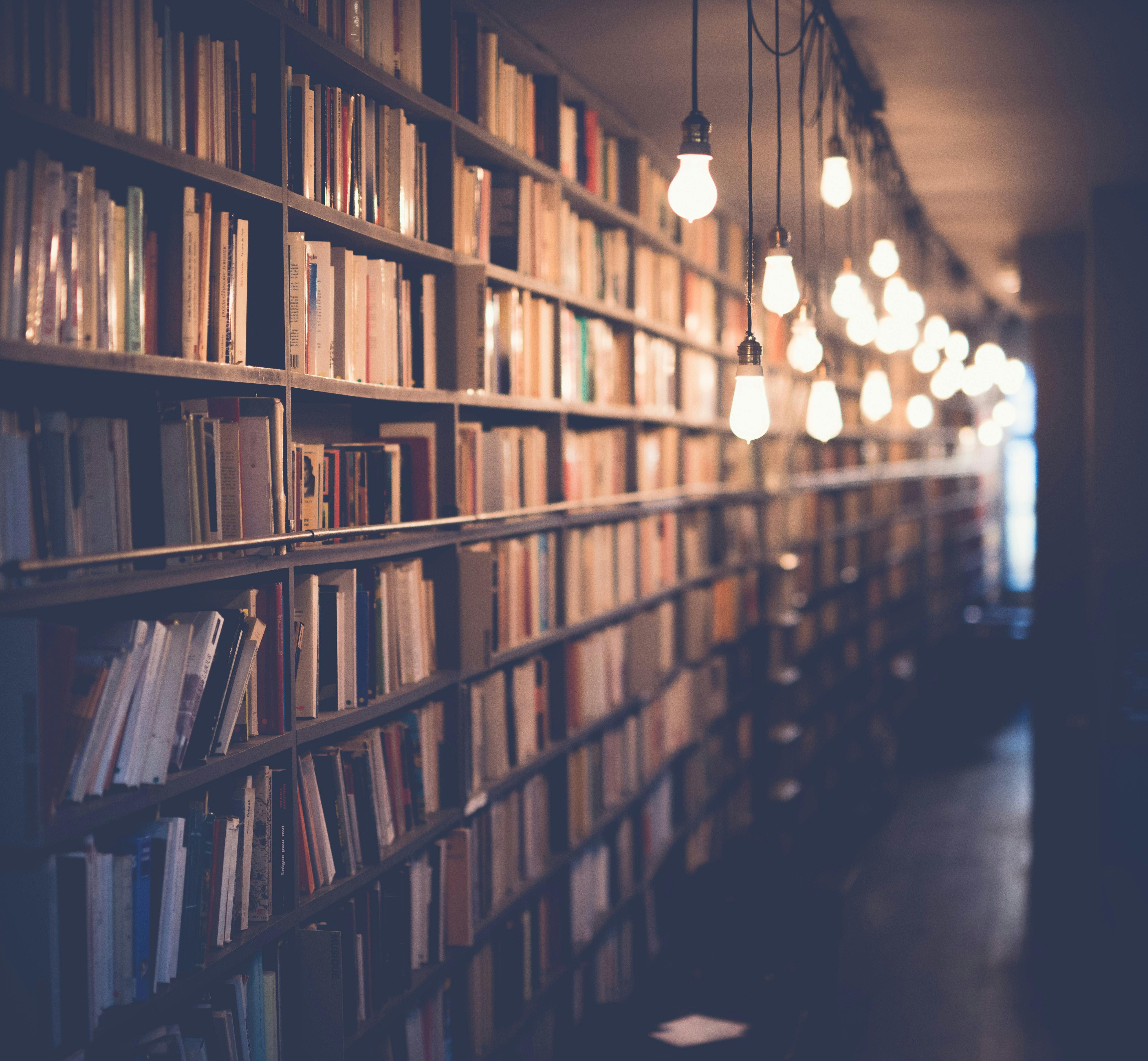
Public libraries, especially in immigrant neighborhoods, have always been places where books are bodies among bodies. You can smell the paper, hear the crinkle of plastic covers, see the smudges of countless fingers. A library book is a shared object, a democratic one. Its wear isn’t a flaw; it’s a testament. When I worked in a branch in Toronto’s east end, I watched newcomers check out stacks of picture books, their children’s fingers tracing the illustrations, leaving faint marks. Those marks were a form of reading, a dialogue. Bookstagram, with its obsession with the unblemished, the new, quietly devalues this shared, physical, often messy engagement. It pushes a model of reading that is private, consumerist, and strangely sterile.
This isn’t just a nostalgic sigh. The aestheticization of reading has real-world consequences. Publishers now design covers to be “Instagrammable.” The rise of sprayed edges, foil stamping, and special editions caters to a market that buys books to display them, not necessarily to read them. This drives up production costs and narrows the range of what gets published, favoring the visually striking over the linguistically daring. A quiet, devastating novel in translation—say, a work by the Swedish author Sara Stridsberg—may struggle to find a cover that can compete with a rainbow-hued romantasy stack. The grid demands a certain kind of book, and the industry is listening.
The Labor of Looking, the Work of Reading
There is real labor behind a beautiful bookstagram post. I don’t deny it. The styling, the lighting, the careful selection of complementary objects. But it is a labor of looking, not a labor of reading. Reading is often ugly. It involves squinting, crying, falling asleep mid-page, cracking the spine, spilling tea. It is a private, embodied act that resists the camera’s gaze. When we conflate the two labors—when we feel we haven’t truly “read” a book unless we’ve also produced a beautiful image of it—we risk turning reading into a performance for an audience, rather than a conversation with a text.
Translation studies offers a useful parallel. A good translation, as the scholar Lawrence Venuti argues, should not be a smooth, invisible pane of glass that erases the translator’s work. It should bear the marks of its making, the slight foreignness that reminds the reader they are encountering a text from another language, another world. Similarly, a healthy reading culture should bear the marks of its readers—the dog-ears, the marginalia, the worn covers. The bookstagram aesthetic, in its pursuit of visual perfection, is like a bad translation: it erases the reader, leaving only a pristine, lifeless object.
The Ethics of the Shelfie
So, is there an ethical way to share books online? I think so, but it requires a shift in intention. Instead of asking, “How does this look?” we might ask, “What does this book do?” A photograph of a book could capture its physical history: the tear on page 47, the coffee stain from a late-night reading session, the library due-date stamp from 1987. It could show the book in use, not just on display. It could pair the image with a reflection on a single sentence, a difficult passage, a moment of confusion. The goal would be to invite the viewer into the reading experience, not to present a finished, polished product.
I’ve started a small practice myself. I take photos of my books only after I’ve finished them, and I try to capture what the reading did to the book. My copy of Kallocain by Karin Boye now has a cracked spine and a note in the margin: “What is the taste of the truth serum?” The photo I took was not beautiful. It was honest. It showed a book that had been wrestled with. That, to me, is a more fitting tribute to Boye’s dystopian vision than any flat lay could ever be.

Reading as a Physical, Imperfect Act
We must return to the body of the book. The weight of it in our hands. The smell of the glue, the paper, the dust. The sound of a page turning. These sensory details are not incidental to reading; they are fundamental to how we process and remember text. Studies in embodied cognition suggest that physical interaction with a book—the tactile feedback, the spatial navigation—enhances comprehension and recall. When we reduce a book to a two-dimensional image, we strip away these cognitive anchors. We make the book easier to consume visually, but harder to absorb intellectually.
For immigrant communities, the physical book carries an additional weight. It is a portable homeland. My father, who arrived in Canada with a single suitcase, brought a Swedish-English dictionary so worn that the cover had detached. He still has it. It is not photogenic. It is a record of survival, of every word he looked up in his first Canadian winter. That dictionary is a library of one. Its value lies not in its appearance, but in its use. Bookstagram, with its emphasis on the new and the beautiful, has no language for this kind of object. We need to develop one.
Building a Vocabulary of Wear
What if we talked about books the way we talk about bodies? A book can be weathered, tender, bruised. It can bear the scars of a hard reading. It can be dog-eared like a familiar face. This vocabulary acknowledges that books change as we change, that they are not static commodities but dynamic partners in a relationship. A shelf of such books is not a display of wealth or taste; it is an autobiography.
I propose a new kind of shelfie: the reading shelfie. Not a curated arrangement, but a documentary snapshot. Show me the book you threw across the room. Show me the page you read so many times the paper is soft. Show me the library book you didn’t want to return, the one with the due-date slip covered in renewals. These are the images that tell the truth about reading: that it is messy, embodied, and often private. That it resists the grid.
Translation and the Untranslatable Image
My work in translation has taught me that some things resist transfer. The Swedish word bläddra means to leaf through a book, but it carries a specific sound—the soft, rhythmic flutter of pages. You cannot photograph that sound. You cannot Instagram the weight of a book in your lap, the way it shifts as you progress from beginning to middle to end. These are the untranslatable elements of reading, the sensory experiences that no image can capture. And yet, they are the very things that make reading a physical, emotional act.
Bookstagram, at its worst, tries to translate the untranslatable. It offers a visual shorthand for an experience that is fundamentally non-visual. It replaces the slow, private, embodied act of reading with a fast, public, disembodied image. This is not just a failure of representation; it is a form of violence against the reading self. It teaches us to value the look of reading over the feel of it, the display over the practice.
The Quiet Resistance of the Library
Public libraries remain spaces of resistance to this trend. In a library, a book’s value is not determined by its cover. Worn, torn, and rebound books sit alongside new releases. The library’s aesthetic is one of use, not display. It is a place where you can be a reader without performing reading. For immigrants, for those who cannot afford to buy books, for anyone who feels excluded by the consumerist logic of Bookstagram, the library offers a different model: reading as a shared, embodied, and deeply private act, all at once.
I remember a woman at the Toronto Public Library who came every week to read the same picture book in Swedish. She would sit in the children’s section, sounding out the words, her lips moving. She never checked the book out. She was, I realized, teaching herself the language of her childhood, a language she had lost. That book was her bridge. It was not beautiful. It was sticky with the fingerprints of other children. But it was doing the most important work a book can do: it was holding a world open for her. No flat lay could capture that.
Toward an Embodied Reading Practice
I am not calling for an end to sharing books online. I am calling for a more honest sharing. Let us post the stained pages, the broken spines, the marginalia. Let us write about the sentences that confused us, the passages we had to read three times, the endings that left us unsatisfied. Let us admit that we sometimes buy books for their covers and then feel guilty. Let us talk about the physicality of reading: the weight of a hardcover in bed, the smell of a used bookstore, the sound of a page tearing because we turned it too fast.
This is not a rejection of beauty. It is a reclamation of a deeper beauty, one rooted in use and time and the body. The Swedish word patina captures this: the sheen on wood or leather that comes from years of handling. A book with patina is a book that has been loved. It is a book that has lived. That is the aesthetic I want to cultivate—on my shelves, in my library, and, yes, even on my Instagram feed.
Practical Steps for a More Honest Bookstagram
If you want to share your reading life online without reducing it to a commodity, here are a few practices to consider:
- Photograph the evidence of reading. Instead of a pristine flat lay, capture the dog-eared page, the coffee ring, the margin note. Let the image tell a story of engagement, not just ownership.
- Write about the body. In your caption, describe the physical experience of the book: its weight, its smell, the way the pages felt. Use sensory language that invites the reader into your embodied experience.
- Highlight the library. Share books you’ve borrowed, not just bought. Show the due-date slip, the library barcode, the worn plastic cover. Celebrate the shared, democratic life of the book.
- Embrace the untranslatable. Acknowledge what the image cannot show. Write about the sound of a page turning, the rhythm of a sentence, the silence after a difficult passage. Let the limits of the image point toward the richness of the reading experience.
FAQ: The Problem with Bookstagram Aesthetics
Why is the bookstagram aesthetic considered problematic?
The bookstagram aesthetic often prioritizes a book’s visual appeal over its content, reducing reading to a performance of taste. This can devalue the messy, private, and embodied experience of reading, and it pressures publishers to produce visually striking books at the expense of literary quality. For communities that rely on libraries and used books, this aesthetic can feel exclusionary, as it celebrates the new and pristine over the worn and shared.
How does the focus on book aesthetics affect immigrant readers?
For many immigrants, books are not just objects of leisure but tools of survival—dictionaries, language primers, and cultural touchstones that bear the marks of heavy use. The bookstagram aesthetic, with its emphasis on unblemished covers and curated shelves, often overlooks these deeply personal, functional relationships with books. It can make readers feel that their worn, annotated, or library-borrowed books are less valuable, erasing the very evidence of their reading journey.
Can you still share books online without falling into the aesthetic trap?
Yes, by shifting the focus from display to documentation. Instead of styling a book to look perfect, capture its imperfections: the cracked spine, the margin notes, the coffee stains. Write captions that explore the physical and emotional experience of reading, not just a summary of the plot. Highlight borrowed books and library finds to celebrate shared, democratic reading. The goal is to invite others into your reading practice, not to present a finished, polished product.
What role do public libraries play in countering this trend?
Public libraries are inherently spaces of use, not display. Their collections are shared, worn, and diverse, reflecting a community’s actual reading habits rather than a curated aesthetic. By centering access, preservation, and the physical history of books, libraries offer a model of reading that is embodied, democratic, and resistant to consumerist pressures. They remind us that a book’s value lies in its ability to be read, not in its appearance on a shelf.
Maren Lindqvist-Berg is a Swedish-Canadian writer, translator, and former library assistant. She writes about the physicality of books, the ethics of reading, and the role of public libraries in immigrant communities.









Recent Comments