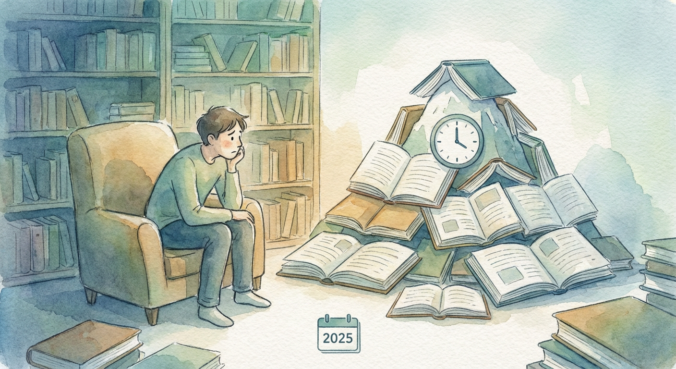
The Numbers Don’t Lie: Reading Goals Are Breaking Readers
Something shifted in the reading world around 2024, and by 2025 the evidence became impossible to ignore. Over 18 million people set a reading challenge goal on Goodreads for this year alone. Sounds ambitious, right? Here’s where it gets uncomfortable: historically, fewer than 40% of those users actually complete their targets. That means roughly 10.8 million readers will end the year marking their goals as failed. Not abandoned. Failed. There’s a difference, and that difference matters psychologically.

The American Library Association’s 2025 research found that 43% of readers aged 18 to 35 now experience what they’re calling “reading anxiety” tied directly to self-imposed annual reading goals. These aren’t people who lack motivation or love for books. These are exactly the readers you’d expect to thrive in a reading culture. Instead, they’re reporting dread. They’re feeling the weight of their Goodreads shelves. The very tool designed to celebrate reading has become, for millions, a source of genuine stress.
How BookTok’s Pace Culture Became a Treadmill
BookTok didn’t invent the 50-book challenge, but it weaponized it. The platform’s algorithm rewards velocity. A thoughtful video essay about the symbolism in Kazuo Ishiguro’s work will reach maybe ten thousand viewers. A rapid-fire haul of fifteen new releases? Two million. The incentive structures are built for speed, and readers internalized the message: more books, faster, equals better.
The #ReadingBurnout hashtag surpassed 200 million views on TikTok by mid-2025. Creators in that space consistently cite BookTok’s relentless pace culture as the primary culprit. Readers describe setting goals that felt exciting in January, then watching those goals metastasize into obligations. One common thread: the shift from “I want to read what sounds good” to “I need to hit my number.” That’s not a small distinction. That’s the difference between desire and duty.
Some of the most honest creators are those who’ve publicly abandoned their challenges. They’ve found that the anxiety of falling behind actually prevents them from picking up books at all. Scrolling through BookTok becomes another source of FOMO rather than inspiration. The community that was supposed to celebrate reading instead becomes a leaderboard.
What Happens When We Read Under Pressure
Naomi S. Baron, whose research in “Words Onscreen” examined how reading practices shape comprehension, published updated findings in 2025 that should genuinely concern anyone who loves books. Goal-driven reading measurably reduces both comprehension and retention compared to self-directed, pressure-free reading. We’re not just reading less joyfully. We’re actually reading worse.
Think about what this means. Someone powering through a 400-page novel to check it off their list will absorb, remember, and benefit from it less than someone who picked up the same book at random on a Tuesday afternoon with zero external pressure. The brain doesn’t work well under artificial constraints. We’re neurologically wired to understand and retain information better when we’re genuinely engaged rather than driven by external metrics.
This creates a brutal feedback loop. Readers feel anxious about hitting their targets, so they read faster to keep pace. Faster reading means worse comprehension. Worse comprehension means less satisfaction and joy from what should be a beloved activity. So they push harder. They add more books to their list. The spiral accelerates.
The Quiet Rebellion: Short Stories, Novellas, and a Return to Pleasure
Somewhere in this chaos, something interesting happened. Waterstones UK reported a 22% increase in sales of short story collections and novellas throughout 2025. Publishers noticed the trend too. These books aren’t flying off shelves because readers suddenly developed an obscure literary taste. They’re selling because they’re completable. They’re finite. A reader can finish a short story collection, feel accomplished, and move on without the guilt of an abandoned 600-page novel.
This shift is quietly radical. Readers are voting with their wallets for reading experiences that feel manageable, that offer genuine satisfaction within a reasonable timeframe. The surge in novellas especially suggests something deeper: a hunger for quality over quantity, for books that respect the reader’s time rather than demand they speed-read through an arbitrary number.
And this isn’t about reading less. It’s about reading differently. Readers aren’t abandoning books. They’re abandoning the false tyranny of numbered goals. Some are discovering that fifty short stories, genuinely savored and understood, bring more joy than fifty novels consumed in a blur.
What Reading Joy Actually Looks Like
Here’s what I’ve noticed in conversations with friends, bookshop customers, and fellow readers: the people experiencing the most reading satisfaction right now aren’t the ones hitting numerical targets. They’re the ones who abandoned their goals entirely. They’re reading without a scoreboard. They’re picking books based on genuine curiosity rather than gap-filling urgency. Some are reading fewer books than before. Almost all report feeling happier about it.
The uncomfortable truth is that reading challenges work for some people. Some readers genuinely thrive with structure and quantifiable goals. But for millions of others, the promise of accountability became a club for self-punishment. The solution isn’t to abolish challenges or abandon BookTok. It’s to be honest about what we actually want from our reading lives and to resist the pressure to perform someone else’s version of literary enthusiasm.
If you’re currently staring at your Goodreads Reading Challenge statistics feeling that familiar knot of anxiety, consider this permission to step back. Read what feels good. Read slowly if that’s what serves you. Read one book or ten. The goal was always supposed to be connection with stories, not conquest of pages. When the metrics start fighting against the joy, it’s time to remember why we started reading in the first place.
What’s your relationship with reading goals these days? I’d genuinely like to hear whether you’re navigating this challenge or walking away from it entirely.
Recent Comments